The Silent Weight of Social-Screen Anxiety
How Constant Digital Visibility Quietly Exhausts the Mind

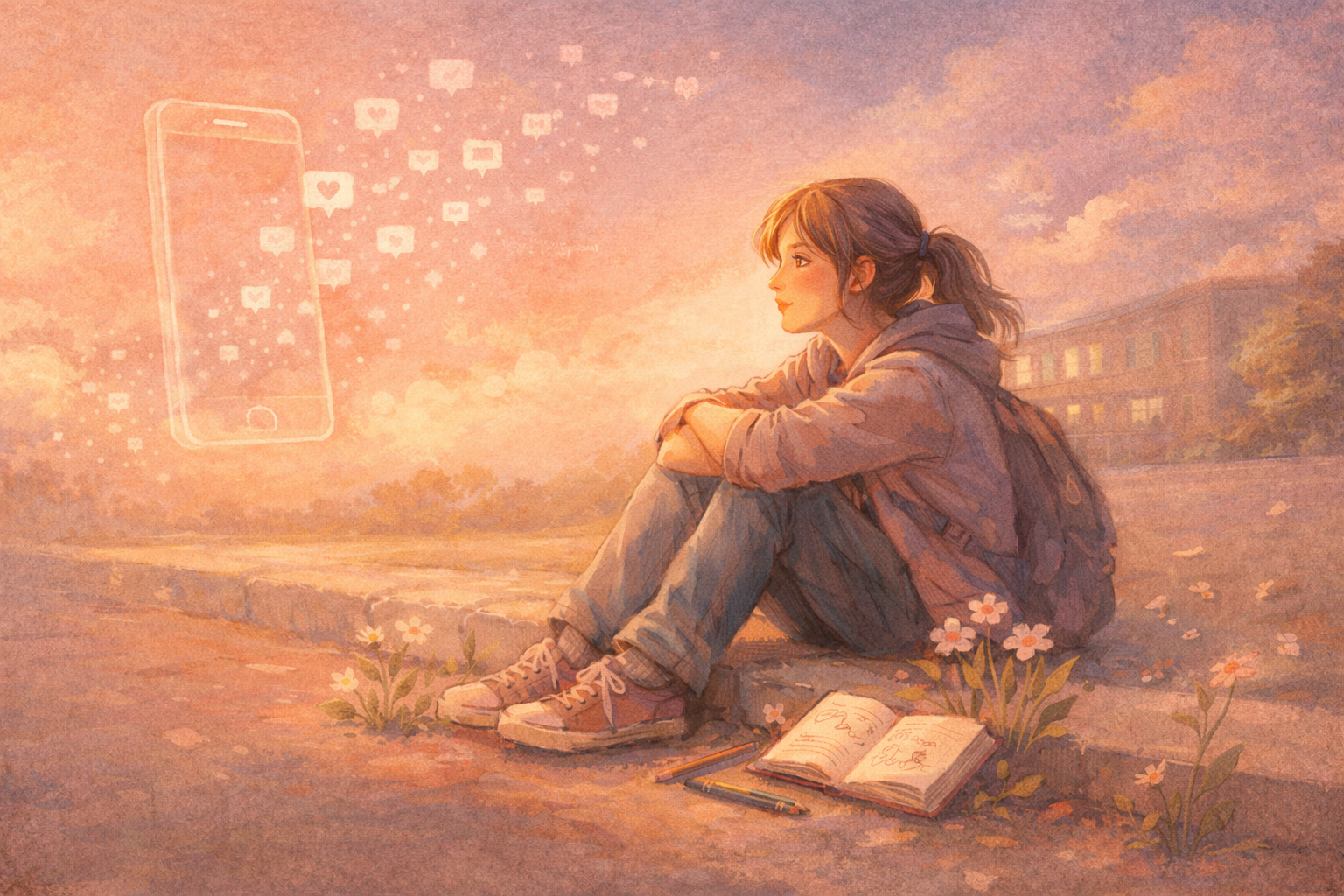
April was fifteen, which meant she carried two backpacks.
First, the canvas one slung over her shoulder, heavy with textbooks and unfinished math homework.
Second, the invisible one glowing in her palm, buzzing every few minutes with notifications, comments, and the restless heartbeat of social media.
At first, she thought the second one was lighter.
However, she was wrong.
Meanwhile, the Algorithm Was Watching
Every morning, April woke up and reached for her phone before her glasses. Consequently, her world sharpened not with sunlight, but with pixels.
Because staring into a glowing rectangle before sunrise is exhausting, even small changes like blue light-blocking glasses can help reduce digital eye strain and improve sleep quality.
She scrolled.
Influencers with glass skin. Classmates at beach parties she had not been invited to. Study routines filmed in golden light. Fitness transformations completed in thirty days. Therefore, her ordinary Tuesday began to look like a failure before breakfast.
Although April knew, logically, that social media highlights only the brightest moments, her brain did not care about logic. Instead, it cared about comparison.
This is how social media anxiety begins.
Not with a scream.
Rather, with a whisper.
In Addition, Comparison Became a Habit
At school, April was quiet but observant. However, her mind was louder than anyone suspected.
She compared her grades.
She compared her hair.
She compared the number of likes on her last photo.
Meanwhile, her friend Nisha laughed freely in the hallway, seemingly untouched by digital pressure. Consequently, April wondered if she was the only one drowning in comparison culture.
She wasn’t.
In fact, teen mental health experts frequently describe this exact pattern: repeated exposure to curated perfection leads to anxiety, low self-esteem, and digital burnout. Furthermore, the brain processes social rejection online almost the same way it processes physical pain.
However, April did not know the neuroscience.
She only knew the feeling.
Therefore, Silence Grew Louder
At dinner, her mother asked, “How was school?”
“It was fine,” April replied.
Nevertheless, her chest felt tight.
Although nothing dramatic had happened, everything felt slightly wrong. Her photo had received fewer likes than usual. Meanwhile, someone had commented “cute” on another girl’s post but ignored hers entirely. Consequently, her mind replayed it like a courtroom scene.
Why not me?
Am I fading?
Did I say something wrong?
Sometimes the nervous system mistakes quiet for danger.
This is the silent weight of screen anxiety. It is subtle. It is persistent. Moreover, it thrives in secrecy.
On the Other Hand, the World Outside Still Existed
One afternoon, however, the Wi-Fi went out.
At first, April panicked. After all, she had streaks to maintain, stories to post, and messages to answer. Nevertheless, there was nothing she could do.
So she went outside.
The air felt awkward at first, as though it were an old friend she had forgotten how to greet. Meanwhile, the sky stretched wide and unconcerned with followers or filters.
At first, the silence felt uncomfortable, almost suspicious, like peace itself needed to be earned.
She sat on the curb and noticed something startling.
No one was watching.
Therefore, no one was judging.
Consequently, her shoulders softened.
In Contrast, Real Life Moved Slower
Later that week, April tried something small.
Instead of posting her outfit, she wore it without documenting it.
Instead of refreshing her notifications, she left her phone in her backpack during lunch.
At first, the anxiety spiked. However, after a few minutes, it settled into something manageable. Meanwhile, she noticed Nisha’s laugh was even louder in person than on video.
Furthermore, she realized that no one was keeping score as intensely as she had imagined.
In fact, she began bringing a small sketchbook to school, just to give her hands somewhere to rest. Simple screen-free creative kits like watercolor sets or beginner sketch bundles can make that transition easier, especially for teens trying to reduce social media anxiety without feeling bored or disconnected.
Social media addiction had convinced her that visibility equaled value. However, reality whispered something different.
Value existed even when unseen.
Consequently, She Began to Reclaim Her Mind
April did not delete her accounts. Instead, she adjusted her relationship with them.
She unfollowed pages that triggered comparison anxiety. Moreover, she followed creators who spoke openly about teen mental health and digital wellness. In addition, she set a timer for thirty minutes of scrolling per day.
Although the urge to compare did not disappear overnight, it weakened.
Meanwhile, something else grew stronger.
Presence.
Finally, The Bloom
One evening, April looked at her reflection without imagining how it would appear on a screen.
She saw uneven eyebrows.
She saw tired eyes.
She also saw resilience.
Although social-screen anxiety had weighed heavily on her, she had learned something vital: the algorithm does not define identity.
Therefore, she began to bloom quietly.
Not online.
Not for validation.
But for herself.
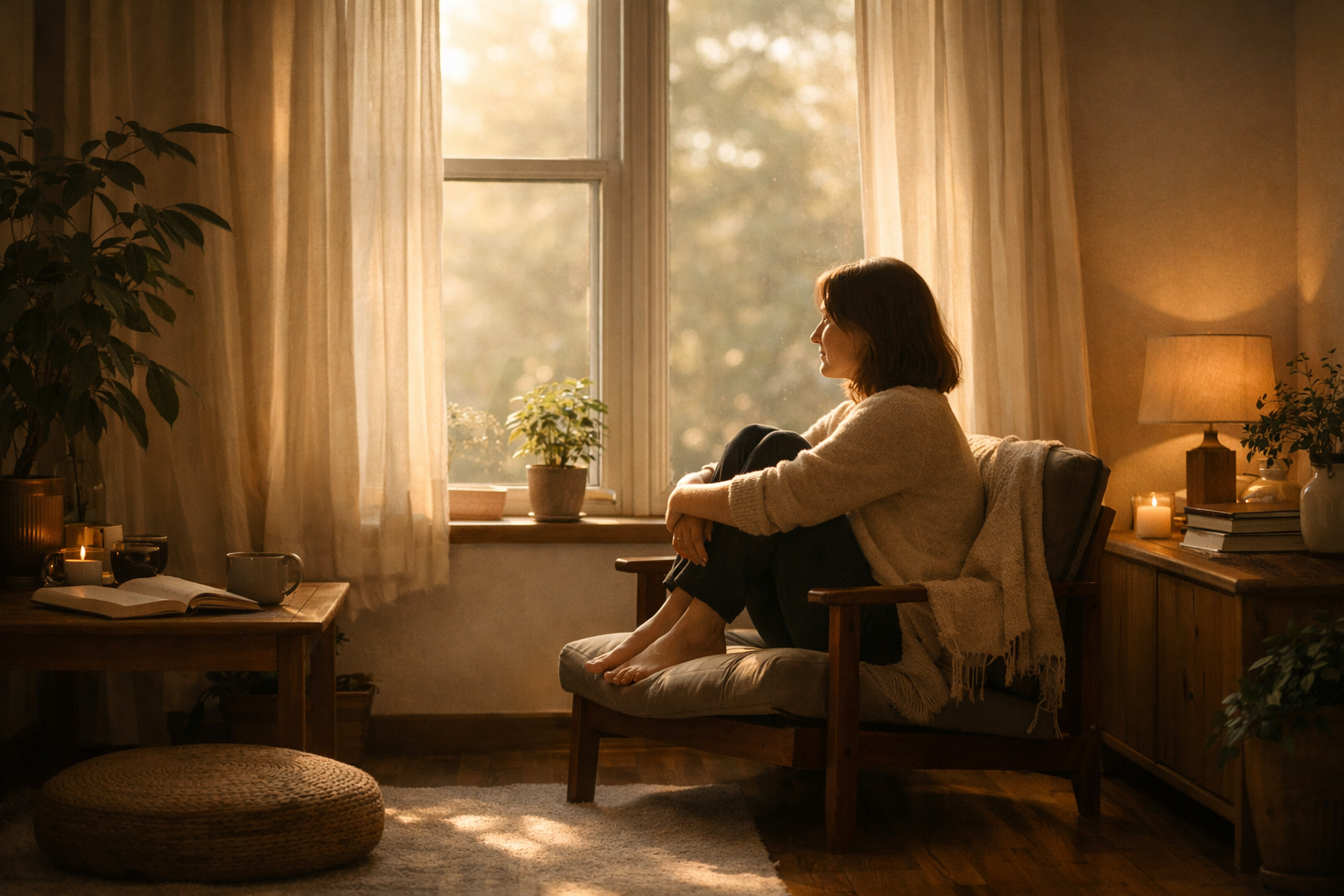
And while the world continued to scroll, April learned to pause.
Consequently, the silent weight became lighter.
Meanwhile, she discovered something extraordinary.
Peace does not trend.
However, it lasts. 🌿



Leave a Reply