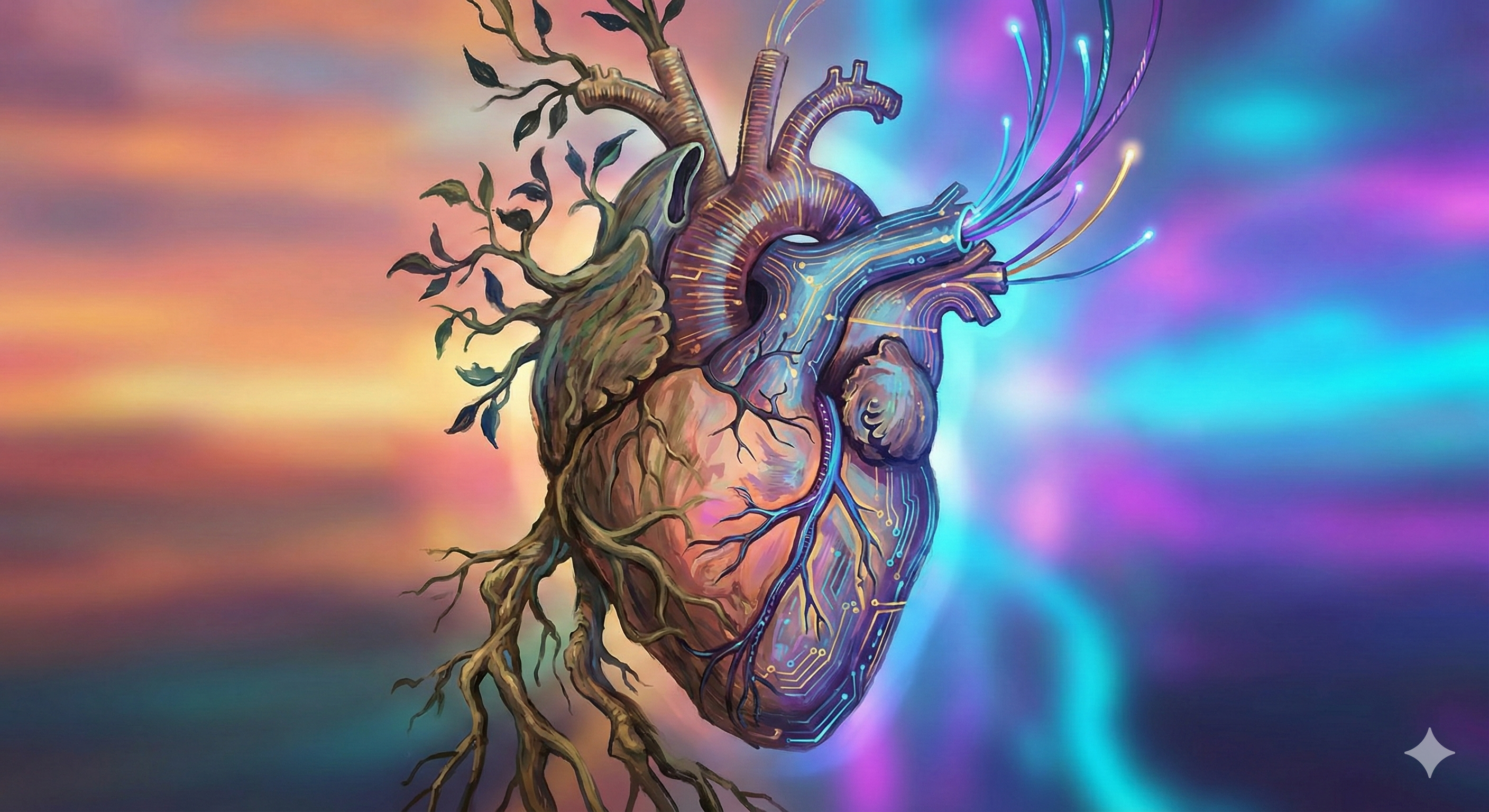
Connection in an AI World: The Psychology We’re Yearning For
Why Human Attachment Still Matters in the Age of Artificial Intelligence

We live in a century where machines finish our sentences, recommend our desires, and sometimes comfort our loneliness before another human even notices it. Meanwhile, our phones glow like pocket-sized constellations, always awake, always attentive. And yet, despite this endless availability, something inside us remains quietly unsatisfied.
Because connection is not the same as contact.

And contact is not the same as closeness.
Therefore, the central question of our era is not whether AI can talk to us. It is whether we are still truly talking to each other.
First, the Illusion of Proximity

On the surface, we appear more connected than ever. We message across continents in seconds. We video call across time zones. We can even confide in AI companions that respond instantly, thoughtfully, and without judgment.
However, proximity created by technology is not automatically intimacy. In fact, while we are digitally closer, we are often emotionally thinner. We share highlights instead of hesitations. We post polished fragments instead of messy truths.
Consequently, we begin mistaking responsiveness for relationship.
In a world where screens are unavoidable, even small boundaries matter; simple tools like blue light blocking glasses can soften the strain and remind your nervous system that it does not have to stay on high alert all day.
An AI responds immediately. A friend may take hours.
An AI remembers every preference. A human may forget your coffee order.
An AI validates consistently. A human may disagree.
At first glance, the machine appears superior. Yet, paradoxically, it is precisely those human imperfections that make the connection meaningful. Because intimacy is not built on flawless replies. Instead, it grows in shared vulnerability, uncertainty, and mutual risk.
Meanwhile, the Brain Still Wants Biology

Even as algorithms become more conversational, our nervous systems remain ancient. Oxytocin still rises through touch. Dopamine still flickers during shared laughter. Our pupils still widen when someone we care about walks into the room.
In other words, our bodies were designed for faces, not just fonts.
Although AI can simulate empathy, it cannot feel it. It predicts patterns. It reflects language. It mirrors tone. However, it does not tremble. It does not blush. It does not sit across from you with a racing heartbeat because your truth matters.
Therefore, when we rely exclusively on digital interaction, something subtle begins to fade. Not dramatically. Not suddenly. But gradually, like color draining from a photograph left too long in sunlight.
We may feel informed. We may feel entertained. We may even feel understood.
Yet, at the same time, we might still feel alone.
In Contrast, Human Connection Is Risky

AI offers safety. It does not judge. It does not leave. It does not get overwhelmed by your emotions.
However, a real connection involves friction. It requires patience. It sometimes involves misunderstanding.
For instance, when you open up to a friend about fear or grief, there is always a possibility they will not respond perfectly. They might stumble. They might say the wrong thing. They might need time to process.
Yet, precisely because there is risk, there is also depth.
When someone chooses to stay with your discomfort, not because they are programmed to, but because they care, your nervous system registers something profound. It recognizes choice. It recognizes effort. It recognizes shared humanity.
Thus, connection becomes meaningful not despite imperfection, but because of it.
Moreover, AI Reflects Us, But Humans Transform Us

An AI companion adapts to your tone. It aligns with your interests. It learns your preferences.
Meanwhile, a human challenges you.
A friend may disagree. A partner may confront your blind spots because growth is rarely comfortable. In fact, sometimes becoming healthier feels like losing the version of you that once felt safe. A colleague may question your assumptions. Initially, this can feel uncomfortable. However, growth often emerges from precisely that discomfort.
Because transformation rarely happens in echo chambers. It happens in dialogue.
If AI primarily reflects who we already are, then human relationships expand who we can become.
Therefore, while AI can support reflection, only humans can co-create evolution.
At the Same Time, We Are Not Meant to Reject Technology
It would be simplistic to frame AI as the villain. After all, digital tools have increased access to therapy, education, and emotional resources. Many people find genuine comfort in AI-guided journaling or mental health chatbots.
Similarly, online communities have provided a sense of belonging to those who once felt isolated.
The issue, therefore, is not the presence of AI. It is the replacement of human intimacy with artificial substitutes.
Technology can be a bridge.
However, it should not become the destination.
When AI helps us articulate feelings we later share with a friend, it enhances connection. When it replaces that friend entirely, something essential is lost.
Consequently, Loneliness Feels Louder

Ironically, as our digital networks expand, reported loneliness continues to rise globally. This is not accidental.
Because connection is not measured by the number of interactions, but by their depth.
You can exchange hundreds of messages and still feel unseen, especially if you are the one who always listens, always steadies, and rarely gets witnessed yourself. Conversely, you can sit in silence with one person and feel profoundly understood.
The difference lies in attunement.
Attunement means someone notices your subtle shifts. They sense when your voice changes. They ask, gently, “Are you really okay?”
An AI may respond appropriately to your words.
A human, however, can respond to your pauses.
Furthermore, The Psychology of Yearning Is Evolutionary
We yearn because we are wired to. For thousands of years, survival depended on belonging. Isolation signaled danger. Therefore, loneliness still activates pain pathways similar to physical injury.
In other words, our craving for connection is not a weakness. It is biology.
Although modern life suggests independence is strength, our nervous systems whisper a different truth. We regulate each other. We calm each other. We co-create safety.
Thus, when we substitute relational warmth with digital efficiency, the body senses the gap. It may manifest as anxiety, restlessness, or emotional numbness.
We are not malfunctioning. We are missing each other.
On the Other Hand, AI Reveals What We Value
Interestingly, the rise of AI also clarifies what makes us human. The more machines replicate conversation, the more we appreciate presence. The more algorithms predict our preferences, the more we cherish spontaneity.
In contrast to flawless digital replies, we begin to value awkward laughter. We treasure unscripted moments. We notice the beauty in someone searching for the right words.
Therefore, perhaps AI is not erasing humanity. Instead, it is highlighting it.
Like a mirror that shows us what cannot be mirrored.
Additionally, Connection Requires Intention
In a world saturated with digital noise, meaningful connections will not happen accidentally. It must be cultivated deliberately.
If you ever find yourself wanting depth but not knowing where to begin, thoughtfully designed conversation card decks can gently open doors to stories, fears, and hopes that ordinary small talk rarely reaches.
First, we must create spaces without interruption.
Second, we must practice listening without rehearsing our response.
Finally, we must allow ourselves to be seen without excessive curation.
Although this sounds simple, it is increasingly radical.
To sit across from someone without checking your phone.
To share a fear without editing it for likability.
To admit uncertainty without masking it in confidence.
These acts, while small, restore depth to our relationships.

Ultimately, We Are Yearning for Witnessing
What do we truly want?
Not constant affirmation.
Not endless convenience.
Not perfectly tailored responses.
We want to be witnessed.
Witnessing is different from observation. Observation collects data. Witnessing holds meaning.
We do not crave perfection, and yet, when life grows quiet, we sometimes mistake calm connection for emotional dullness.
When someone witnesses you, they acknowledge your experience as real and significant. They do not simply respond. They resonate.
AI can analyze patterns.
Humans can hold presence.
And presence, ultimately, is what nourishes the psyche.
Therefore, The Future of Connection Is a Choice
We stand at a crossroads where artificial intelligence grows more persuasive, more personalized, and more embedded in daily life. Meanwhile, the human need for closeness remains unchanged.
Consequently, the future of connection will not be determined by technology alone. It will be shaped by our choices.
Will we allow convenience to replace courage?
Or will we use digital tools to support deeper human bonds?
We can let AI draft the message.
However, we must still choose to send it with sincerity.
We can let technology organize our schedules.
Yet, we must still show up fully when we meet.
In the end, connection is not something we download. It is something we practice.
And perhaps, in this shimmering age of intelligent machines, the most rebellious act is beautifully simple:
Look up.
Listen longer.
Stay present.
Because even in an AI world, the psychology we are yearning for has always been the same.
We do not crave perfection.
We crave each other. 🌿




Leave a Reply