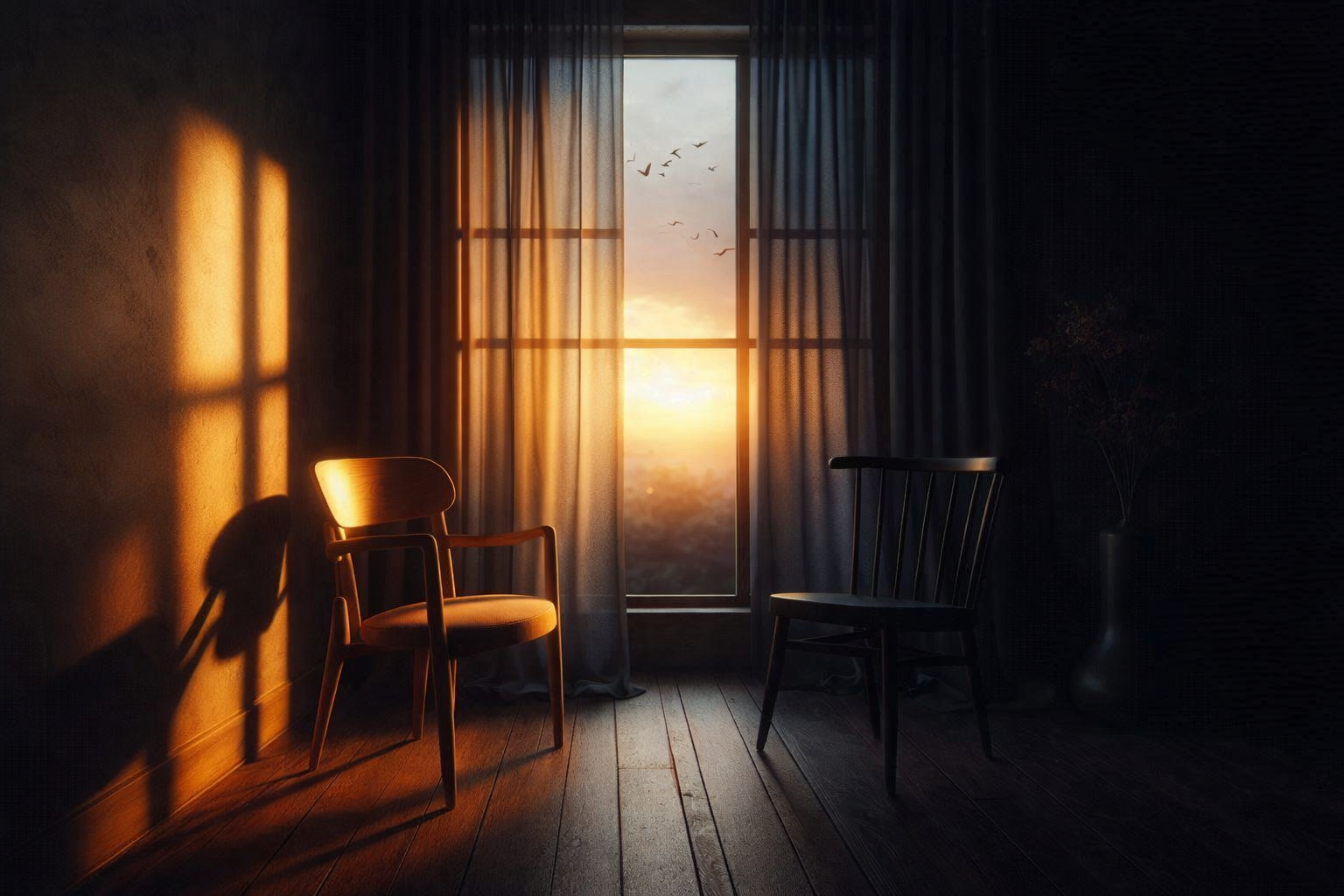
The Chair That Stayed Empty — A Psychological Story About Emotional Acknowledgement
The Quiet Cost of Unseen Feelings

She never noticed when the chair became empty and
that’s how absence works—it tiptoes in, removes its shoes, and rearranges the furniture while you’re busy living.
At first, the chair was just unused,
Then it became available
Later it became a quiet witness to everything she didn’t say out loud.
She told herself she liked the extra space. Space is fashionable. Space is healthy. Space is what people with boundaries brag about. She placed a plant beside the chair, and then moved it, but then she forgot to water it. The plant survived. The chair did not complain.
People came and went. Conversations bloomed, wilted, composted themselves into memory. Laughter passed through the room like migratory birds—never nesting, never staying long enough to make a mess. And still, the chair waited. Patient. Ridiculous. Loyal to a fault.
Some nights she caught herself glancing at it mid-thought, as if expecting the air to sit down and answer back.
Psychology books would say the chair was a projection. A placeholder. A symbol of unmet emotional needs. She tried reading that once, but the chair remained unimpressed. Symbols don’t creak when you shift your weight. Chairs do.
Sometimes, when the room went very still, the chair stopped being just a chair.
It learned how to speak.
When Advice Filled the Room
Her parents sat there first—always briefly, always upright, as if posture itself could solve grief.
“How much time will you be stuck in the past?”
“Learn to let it go.”
They meant well, always did. They spoke as if memory were a habit that could be unlearned with enough discipline.
Her siblings followed, familiar and restless.
“Come on,” they said.
“At least try to be understanding.”
Understanding, apparently, was something you performed. A version of yourself edited for comfort.
Then her friends arrived, filling the chair with energy and good intentions.
“Let’s go out,” they smiled.
“Maybe you’ll feel better.”
You might like this – Emotional Distance in Friendships
As if feelings were weather. As if pain needed entertainment more than presence.
Advice stacked itself high. Motivation layered over misunderstanding. Everyone trying to move her forward. No one willing to sit where she was.
She drifted after that.
Not dramatically. Not tragically.
Just untethered.
Her thoughts wandered in slow, aimless circles. She wondered what the meaning of living was supposed to feel like. Progress? Purpose? Or simply following advice well enough that no one worried about you anymore?
Maybe they were right, she thought.
Maybe she should let it go.
Be understanding.
Try harder.
Feel better.
The logic was clean. The emptiness was not.
The Quiet Realisation
One evening, as the sun slipped beyond the horizon, the room filled with a soft, golden hush. The sky bruised into lavender and amber. Birds stitched their last sentences across the air. The view was mesmerizing. It wasn’t dramatic. It was just honest.
She felt something then—something she hadn’t felt in a very long time. Not happiness. Not relief. Just presence.
Unknowingly, she sat down.

Only after the sun had fully set did she realize she was sitting on the chair.
But what she felt wasn’t what she had been searching for.
Looking for acknowledgment from those who had sat there before—no matter how loving—had been the wrong place to look.
What mattered most was simpler. Harder.
She needed to be understanding of herself.
Her slow healing.
The feelings that arrived late and left quietly.
The pain that didn’t need fixing to be valid.
As that realization settled, something loosened. Not healed—healing is too ambitious—but eased. Like a knot remembering it was once a rope.
That’s when she began sitting in the chair herself.
If you are struggling to name the emptiness you feel, I highly recommend reading Running on Empty by Dr. Jonice Webb. It was the first time I felt truly understood.
Sitting With Herself
Now, she sits on the same chair by the window, but everything is different.
The room no longer waits for someone else.
Neither does she.
She looks forward to her time there—books stacked beside her, the internet offering its soft background noise, birds becoming familiar strangers she greets without expectation.
The chair still listens.
But now, it listens to someone who has learned the quiet art of acknowledging her own feelings—and in doing so, has finally begun to heal.
Here are some self-help strategies..




Leave a Reply